Issued for comment by: National Data Standardization Technical Committee (全国数据标准化技术委员会, SAC/TC609), which with the National Cybersecurity Standardization Technical Committee (SAC/TC260) proposes and has jurisdiction over the standard. Competent authority on the plan record: National Data Administration.
Status: draft recommended national standard (GB/T XXXXX—XXXX), plan number 20262772-T-907, project approved May 22, 2026.
Consultation: notice 全国数标委秘〔2026〕60号, dated November 16, 2026. Comments due by January 16, 2027, through the committee’s website. Not in force.
Translation note — DCC. Translated in full from the consultation draft published on the committee’s website, tc609.org.cn, as retrieved by DCC on November 26, 2026. The cover page, table of contents and running headers are omitted; the lists of drafting organizations and drafters are kept in Chinese.
The draft’s own English title is “Recognition Catalogue of key data—General principles”, and its English terms render 重要数据 as “key data”. DCC keeps its established rendering, “important data”, and “identification” for 识别, so that this page reads consistently with the Data Security Law and GB/T 43697-2024. State-secret levels are rendered “confidential-level” (秘密级), “secret-level” (机密级) and “top-secret-level” (绝密级), with the Chinese given each time. In standards drafting, “shall” translates 应, “should” 宜 and “may” 可. Thresholds stated with 以上 are inclusive and are rendered “or more”.
Foreword
This document is drafted in accordance with the provisions of GB/T 1.1—2020, Directives for standardization — Part 1: Rules for the structure and drafting of standardizing documents.
This document is proposed by, and falls under the jurisdiction of, the National Data Standardization Technical Committee (SAC/TC609) and the National Cybersecurity Standardization Technical Committee (SAC/TC260).
Drafting organizations of this document: 北京数据发展研究中心、中国电子技术标准化研究院、国家数据局政策和规划司、国家互联网信息办公室网络数据管理局、中国信息通信研究院、公安部十一局、国家工业信息安全发展研究中心、国家数据发展研究院、清华大学、中国科学院信息工程研究所、清华四川能源互联网研究院、北京邮电大学、中电数据产业集团有限公司。
Principal drafters of this document: 王明华、栾婕、范科峰、姚相振、胡影、张宇光、李海东、陈琦、谢玮、任娟娟、傅蕊、李灿强、曾丽丽、魏薇、陈建伟、李齐、王善甲、王海龙、张则阳、李潇、薛飞、王墨、董贞良、王兆兴、杨帅锋、姜江、王晨、陈驰、赵增振、周晨炜、宋亮、胡一凡、马红霞、刘格扬、安伟、王鼎华。
Introduction
On September 1, 2021, the Data Security Law of the People’s Republic of China formally took effect. It expressly provides that “the State establishes a system of classified and hierarchical protection of data”, and that “the national data security work coordination mechanism coordinates the relevant departments in formulating important data catalogues and strengthening the protection of important data”, and that “each region and each department shall, in accordance with the system of classified and hierarchical protection of data, determine the specific catalogue of important data for that region, that department and the relevant industries and fields, and give priority protection to the data listed in the catalogue”.
Under the guidance of the national data security work coordination mechanism, in accordance with the Data Security Law of the People’s Republic of China and other laws and regulations, and on the basis of GB/T 43697-2024, Data Security Technology — Rules for Data Classification and Grading, and other documents, this document puts forward the “Important Data Identification Catalogue” series of national standards, comprising the Important Data Identification Catalogue — General Rules and a number of Important Data Identification Catalogue — ×× Industry documents. The series further refines and makes clear the data classification and grading rules of each industry and field, and is used to guide data handlers in carrying out the identification of important data.
1 Scope
This document makes clear the definition, overall design, and compilation and use requirements of the Important Data Identification Catalogue, and makes provision for its compilation process, basic principles and content elements.
This document applies to the relevant departments, organizations or units of each industry and field in compiling an Important Data Identification Catalogue in accordance with the requirements of this document and in light of actual conditions. It also applies to each region and each department in guiding data handlers to carry out the identification of important data and the compilation of important data catalogues as required.
This document does not apply to data involving State secrets or to military data. Data that falls within the provisions on the scope of secrecy matters shall be managed in accordance with the requirements of the State’s laws and regulations on secrecy.
2 Normative references
The contents of the following documents, through normative reference in the text, constitute indispensable provisions of this document. For dated references, only the edition corresponding to that date applies to this document; for undated references, the latest edition (including all amendments) applies to this document.
GB/T 43697—2024 Data Security Technology — Rules for Data Classification and Grading
3 Terms and definitions
The terms and definitions defined in GB/T 43697—2024 and the following apply to this document.
3.1 data (数据)
Any record of information in electronic or other form.
3.2 data security (数据安全)
Ensuring, through the adoption of necessary measures, that data is in a state of effective protection and lawful use, and having the capability to safeguard a continuing state of security.
3.3 data classification and grading (数据分类分级)
The process of classifying data by business attribute, and grading data by factors such as importance, precision, scale and security risk, in compliance with the requirements of the State’s laws and regulations.
Note: Data is divided into three grades: general, important and core.
3.4 important data (重要数据)
Data of a specific field, a specific group or a specific region, or data reaching a certain precision and scale, that, once leaked, tampered with or damaged, may directly endanger national security, economic operation, social stability, or public health and safety.
Note: Data that affects only the organization itself or individual citizens is generally not treated as important data.
3.5 core data (核心数据)
Important data that has a relatively high degree of coverage of a field, group or region, or that reaches a relatively high precision, a relatively large scale or a certain depth, and that, once unlawfully used or shared, may directly affect political security.
Note: Core data mainly includes, among important data, data bearing on key areas of national security; data bearing on the lifelines of the national economy, important aspects of people’s livelihood and major public interests; and other data determined upon assessment by the relevant departments of the State.
3.6 general data (一般数据)
Other data apart from core data and important data.
3.7 identification of important data (重要数据识别)
The process by which a data handler, in accordance with national standards and the relevant requirements of the industry or field to which its business belongs, sorts out, analyzes and assesses its data resources by a systematic method, and determines whether the data concerned is important data or core data.
3.8 important data identification rules (重要数据识别规则)
The standards and normative documents on data classification and grading that an industry competent (regulatory) department formulates in detail, on the basis of the relevant national standards, in light of the nature and characteristics of the industry and by combining qualitative and quantitative methods, in order to guide data handlers in its industry or field in accurately identifying important data and core data. They usually include the principles, methods, scope of application, identification criteria, work procedures and management requirements of data classification and grading.
Note: The relevant national standards means GB/T 43697—2024, Data Security Technology — Rules for Data Classification and Grading.
3.9 Important Data Identification Catalogue (重要数据识别目录)
The collection of rules, requirements and the like in which the important data identification rules of each industry and field are systematically organized in a unified format and presented in the form of national standards.
3.10 important data catalogue (重要数据目录)
The specifics of the important data and core data that a data handler holds, which the data handler, having carried out the identification of important data by reference to the Important Data Identification Catalogue, submits to the industry competent (regulatory) department in the prescribed format and at the prescribed frequency. A sample important data catalogue is given in Appendix A.
4 Overall requirements for the Important Data Identification Catalogue
4.1 Requirements for compiling the Important Data Identification Catalogue
The Important Data Identification Catalogue is compiled in accordance with the following requirements:
a) Overall coordination: the national data security work coordination mechanism coordinates the relevant departments in compiling and managing the Important Data Identification Catalogue.
b) Composition of the system: the Important Data Identification Catalogue is a series of national standards, divided by industry and field, and made up of a number of documents titled Important Data Identification Catalogue — (name of industry).
Note: For example, Important Data Identification Catalogue — Industry, — Telecommunications, — Energy, — Civil Aviation, — Natural Resources, — Geographic Information, — Education, — Aerospace, and so on.
c) Compiling body: adhering to the principle that “whoever is in charge of the business is in charge of the business data and in charge of data security” (谁管业务,谁管业务数据,谁管数据安全), each industry competent (regulatory) department organizes the relevant units to compile the Important Data Identification Catalogue for its industry or field, and guides the data handlers of its industry or field in carrying out the identification and reporting of important data.
d) Dynamic updating: the Important Data Identification Catalogue is subject to dynamic management. It is extended step by step as the important data identification rules of each industry and field are formulated and issued, and formulation, revision, supplementation or adjustment is carried out in a timely manner according to actual needs and changes in circumstances. The revision of the Important Data Identification Catalogue — (name of industry) for a single industry does not affect the validity of the Important Data Identification Catalogues of other industries and fields.
4.1.1 Requirements for compiling important data identification rules
In compiling an Important Data Identification Catalogue, each industry and field shall, in light of the actual conditions and characteristics of the industry, refine and make clear the important data identification rules, detailed rules and the like. The compilation of the rules should refer to the following requirements:
a) Data involving restricted-class proprietary technology in the Catalogue of Technologies Prohibited or Restricted from Export in China (中国禁止出口限制出口技术目录) shall be identified as important data.
b) Raw non-secret data that is related to a confidential-level (秘密级) State secret, or that is used or analyzed in the course of generating a confidential-level (秘密级) State secret, shall be identified as important data.
c) Relevant data whose coverage reaches the provincial level or above shall in principle be identified as important data. In practice it may be identified comprehensively, in accordance with the relevant provisions of the national industry competent (regulatory) department, in light of factors such as the importance, precision, scale and security risk of the data.
d) Data involving personal information at the level of one million persons or more, or sensitive personal information at the level of ten thousand persons or more, shall in principle be identified as important data. In practice it may be identified comprehensively, in accordance with the relevant provisions of the national industry competent (regulatory) department, in light of factors such as the application scenario and the type of personal information.
Note: The level of one million persons means 1 million (inclusive) to 10 million (exclusive) persons; the level of ten thousand persons means 10,000 (inclusive) to 100,000 (exclusive) persons.
e) Where personal information involves the following situations, whether it is important data may be identified comprehensively, in accordance with the relevant provisions of the national industry competent (regulatory) department, in light of factors such as the application scenario and the type of personal information: for the conclusion or performance of a contract to which the individual is a party, such as cross-border shopping, cross-border delivery, cross-border remittance, cross-border payment, cross-border account opening, air ticket and hotel booking, visa processing and examination services; carrying out cross-border human resources management in accordance with labor rules and regulations formulated in accordance with law and collective contracts concluded in accordance with law; and protecting the life, health and property safety of natural persons in an emergency. Among these, data that affects only the organization itself or individual citizens is generally not treated as important data.
4.1.2 Requirements for compiling core data identification rules
In compiling an Important Data Identification Catalogue, each industry and field shall, in light of the actual conditions and characteristics of the industry, refine and make clear the core data identification rules, detailed rules and the like. The compilation of the rules should refer to the following requirements:
a) Data involving prohibited-class proprietary technology in the Catalogue of Technologies Prohibited or Restricted from Export in China shall be identified as core data.
b) Raw non-secret data that is related to a State secret at the secret level (机密级) or above, or that is used or analyzed in the course of generating a State secret at the secret level (机密级) or above, shall be identified as core data.
c) Relevant data whose coverage reaches multiple provinces or even the whole country shall in principle be identified as core data. In practice it may be identified comprehensively, in accordance with the relevant provisions of the national industry competent (regulatory) department, in light of factors such as the importance, precision, scale and security risk of the data.
d) Data involving personal information at the level of ten million persons or more, or sensitive personal information at the level of one hundred thousand persons or more, shall in principle be identified as core data. In practice it may be identified comprehensively, in accordance with the relevant provisions of the national industry competent (regulatory) department, in light of factors such as the application scenario and the type of personal information.
Note: The level of ten million persons means 10 million (inclusive) to 100 million (exclusive) persons; the level of one hundred thousand persons means 100,000 (inclusive) to 1 million (exclusive) persons.
4.1.3 Other compilation requirements
In compiling identification rules for important data and core data, the following requirements should also be referred to:
a) Within the relevant industry or field, non-secret data that is of high precision, has not been made public and involves national security shall in principle be identified as important data or core data.
b) Within the relevant industry or field, data that can reflect the design principles, process flows, manufacturing methods and the like of items included in the State’s export control (including but not limited to source code, technical schemes, key technical indicators and parameters, detailed test data and inspection reports) shall in principle be identified as important data or core data.
c) Within the relevant industry or field, data whose disclosure may affect the security and secrecy of military installations shall in principle be identified as important data or core data.
d) Where a foreign country or region adopts discriminatory prohibitions, restrictions or other similar measures against China in respect of investment, trade or other matters relating to data and to technologies for developing and using data, the national industry competent (regulatory) department may, according to the needs of its work and after reporting to the national data security work coordination mechanism for the record, dynamically adjust the identification rules for important data or core data in respect of situations involving the provision of data to that country or region.
4.2 Requirements for using the Important Data Identification Catalogue
A data handler carries out the identification, reporting and the like of the important data of its own organization on the basis of the Important Data Identification Catalogue, following the steps and requirements below:
a) Sorting out resources: the data handler comprehensively sorts out the data resources of its organization and establishes how much data it has.
b) Identification and reporting: the data handler, according to the business attributes of the data and by reference to the relevant rules of the Important Data Identification Catalogue of the industry or field to which the business belongs, classifies and grades the data of its organization, carries out the identification of important data, forms a proposed important data catalogue, and submits it to the industry competent (regulatory) department in the prescribed format and at the prescribed frequency.
Note: For an industry or field to which the business belongs and for which no Important Data Identification Catalogue national standard has yet been issued, the identification and reporting of important data is carried out in accordance with the relevant requirements of the State’s and that industry or field’s standards and normative documents on data classification and grading.
c) Review of important data: the national industry competent (regulatory) department reviews the important data catalogue submitted by the data handler and, once it is determined, reports it to the office of the national data security work coordination mechanism.
d) Review of core data: where the important data catalogue involves core data, the national industry competent (regulatory) department puts forward a proposed core data catalogue and reports it to the office of the national data security work coordination mechanism for review and determination.
e) Notification of results: the national industry competent (regulatory) department shall promptly inform the data handler concerned, in an appropriate manner, of the result of the review and determination of the important data catalogue.
f) Priority protection: the data handler shall, in accordance with the relevant provisions and requirements, apply priority protection to the data listed in the important data catalogue.
g) Dynamic updating: where important data is adjusted or the relevant identification rules change, the data handler shall, by reference to this standard or as required by the industry competent (regulatory) department, promptly update and resubmit its important data catalogue.
Note: Adjustments to important data include but are not limited to: the deletion or addition of important data; a marked increase in the scale, coverage or precision of important data; a change in the responsible entity; an update to the data export status or to cross-entity flows, or the addition of foreign-related data; and a major change in data security protection.
5 Compilation of the Important Data Identification Catalogue
5.1 Process
The compilation of an Important Data Identification Catalogue shall follow the work process below:
a) The national industry competent (regulatory) department studies and puts forward a proposal for compiling the Important Data Identification Catalogue national standard for its industry or field, and reports it to the national data security work coordination mechanism for the record.
b) The national industry competent (regulatory) department organizes the relevant enterprises and public institutions and, in accordance with the relevant management requirements for national standards, is responsible for the project approval and drafting of the Important Data Identification Catalogue national standard for its industry or field.
5.2 Basic principles
The compilation of an Important Data Identification Catalogue shall conform to the following basic principles:
a) Consistency: the Important Data Identification Catalogue shall follow the State’s overall requirements for classified and hierarchical protection of data, and ensure that it connects with, is consistent with and is coordinated with the relevant systems of the State.
b) Operability: the Important Data Identification Catalogue shall be based on the relevant normative documents of the State and the industry on data classification and grading, adhere to a practical orientation, and give prominence to being workable and enforceable in practice.
c) Objectivity: the compilation of the Important Data Identification Catalogue shall observe the principles of objectivity and neutrality, maintain a market order of fair competition, and protect the lawful rights and interests of data handlers.
5.3 Content elements
An Important Data Identification Catalogue shall include but is not limited to the following content elements:
a) Data classification rules: classifying data by business attribute, with subdivision as needed into first-level categories, second-level categories, third-level categories (if needed) and fourth-level categories (if needed).
b) Data grading rules: including the data grading framework, grading factors, degree of impact and objects of impact, and criteria for determining the grade of data that combine qualitative and quantitative elements.
c) Important data identification rules: including the impact conditions relating to national security, economic operation, social stability, public health and safety, and the like.
d) Core data identification rules: including the impact conditions relating to key areas of national security, the lifelines of the national economy, important aspects of people’s livelihood, major public interests, and the like.
e) Detailed rules for identifying important data: in light of the characteristics of the industry or field, refining and making clear the detailed rules for identifying important data, with examples.
f) Detailed rules for identifying core data: in light of the characteristics of the industry or field, refining and making clear the detailed rules for identifying core data, with examples.
Appendix A (normative) — Sample important data catalogue
Table A.1 gives a sample important data catalogue. Items marked * in the table are mandatory. The main contents include but are not limited to:
a) Basic information on the data: including the data name, the data classification and grading specification relied on, the first-level data category, the second-level data category, the third-level data category (if any), the fourth-level data category (if any), the data grade, the data carrier, the data source, the data quantity, the coverage of the data, the data precision, and the like.
b) Information on the responsible entity: including the name of the data handler, the institution code, the location of the data handler, the person responsible for data security, and the like.
c) Information on data handling: including the purpose of data handling, the data export situation, whether cross-entity flows are involved, whether the data is foreign-related data, and the like.
d) Information on data security protection: including the name of the information system, the Multi-Level Protection Scheme (MLPS) status, the data security risk assessment situation, and the like.
Table A.1 — Sample important data catalogue
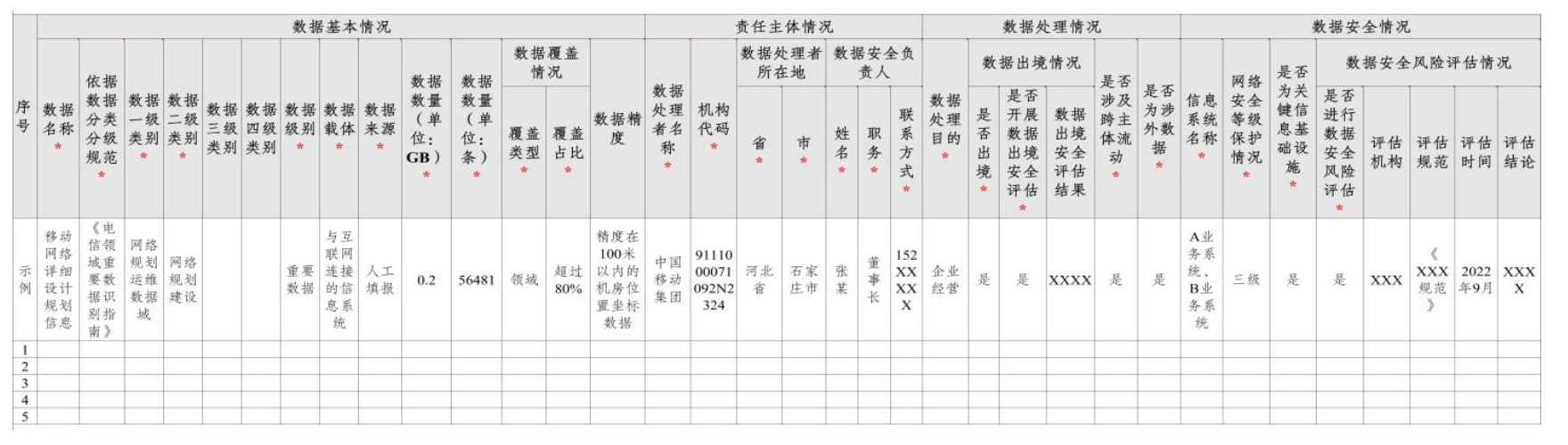
Table A.1 from the consultation draft, in Chinese. DCC's English reading of the columns and the example row follows.
DCC’s English reading of Table A.1. The table has one row per item of important data and four column groups. Columns the draft marks with * are mandatory; the others are marked “optional” below.
| Group | Column | Example row in the draft |
|---|---|---|
| — | No. | Example |
| Basic information on the data | Data name * | Detailed design and planning information for the mobile network |
| Data classification and grading specification relied on * | Guide to Identifying Important Data in the Telecommunications Field | |
| First-level data category * | Network planning, operation and maintenance data domain | |
| Second-level data category * | Network planning and construction | |
| Third-level data category (optional) | — | |
| Fourth-level data category (optional) | — | |
| Data grade * | Important data | |
| Data carrier * | Information system connected to the internet | |
| Data source * | Manual entry | |
| Data quantity (unit: GB) * | 0.2 | |
| Data quantity (unit: records) * | 56481 | |
| Coverage: type of coverage * | Field | |
| Coverage: share covered * | More than 80% | |
| Data precision (optional) | Coordinates of equipment-room locations to a precision within 100 meters | |
| Responsible entity | Name of data handler * | China Mobile Group (中国移动集团), as an illustration |
| Institution code * | 9111000071092N2324 (as printed) | |
| Location of data handler: province * | Hebei Province | |
| Location of data handler: city * | Shijiazhuang City | |
| Person responsible for data security: name * | Zhang (anonymized) | |
| Person responsible for data security: position * | Chairman of the board | |
| Person responsible for data security: contact details * | 152XXXXX | |
| Data handling | Purpose of data handling * | Business operation |
| Data export: whether exported * | Yes | |
| Data export: whether a data export security assessment has been carried out * | Yes | |
| Data export: result of the data export security assessment (optional) | XXXX | |
| Whether cross-entity flows are involved * | Yes | |
| Whether foreign-related data * | Yes | |
| Data security | Name of information system * | Business system A, business system B |
| MLPS status * | Level 3 | |
| Whether critical information infrastructure * | Yes | |
| Risk assessment: whether a data security risk assessment has been carried out * | Yes | |
| Risk assessment: assessment institution (optional) | XXX | |
| Risk assessment: assessment specification (optional) | XXX Specification | |
| Risk assessment: time of assessment (optional) | September 2022 | |
| Risk assessment: assessment conclusion (optional) | XXXX |
Notes (from the draft):
a) No.: the sequence of the important data reported, numbered from 1.
b) Data name: the field name of the important data.
c) Data classification and grading specification relied on: the data classification and grading specification, Important Data Identification Catalogue or the like of the industry or field that was referred to.
d) First-level, second-level, third-level and fourth-level data category: the category to which the reported data belongs in the data classification and grading specification referred to.
e) Data grade: the grade after the data has been graded; “important data” or “core data” may be entered.
f) Data carrier: the form in which the data is carried. The entry shall be one of: information system connected to the internet; information system not connected to the internet; other electronic data; non-electronic data. If the data carrier is an information system that is connected to the internet and provides services externally, a column shall be added after the assessment conclusion to report the IP address or domain name.
g) Data source: how the data was collected or generated.
h) Data quantity (unit: GB): the statistical value of the space the data occupies on the storage medium, including necessary storage redundancy and metadata, reported in GB.
i) Data quantity (unit: records): a count by number of data records.
j) Type of coverage: the field, group or region to which the data belongs. The entry shall be one of: field, group, region.
k) Share covered: the field, group, region or other aspect to which the data belongs, and its share.
l) Data precision: the smallest unit into which the data is subdivided and the granularity of the values (or the precision grade).
m) Name of data handler: the name registered on the business licence of the enterprise or public institution.
n) Institution code: the organization’s unified social credit code.
o) Province, city: the province (autonomous region, municipality directly under the Central Government) and the districted city (prefecture, autonomous prefecture, league) where the organization is registered.
p) Name, position, contact details: the name, position and contact details of the organization’s person responsible for data security.
q) Purpose of data handling: the purpose for which the organization handles this data.
r) Whether exported; whether a data export security assessment has been carried out; whether cross-entity flows are involved; whether foreign-related data; whether critical information infrastructure; whether a data security risk assessment has been carried out: “yes” or “no” may be entered according to the facts.
s) Result of the data export security assessment: the assessment result issued by the national cyberspace administration.
t) Name of information system: the Chinese name of the information system that carries the data.
u) MLPS status: the level at which the information system carrying the data has been filed.
v) Assessment institution: the name of the institution that carried out the data security risk assessment.
w) Assessment specification: the national standard, industry standard, local standard or the like on which the data security risk assessment was based.
x) Time of assessment: the year and month in which the data security risk assessment was completed.
y) Assessment conclusion: the overall conclusion of the data security risk assessment.
Bibliography
[1] GB/T 43697-2024 Data Security Technology — Rules for Data Classification and Grading
[2] Data Security Law of the People’s Republic of China (adopted at the 29th Session of the Standing Committee of the 13th National People’s Congress of the People’s Republic of China on June 10, 2021)
[3] Personal Information Protection Law of the People’s Republic of China (adopted at the 30th Session of the Standing Committee of the 13th National People’s Congress of the People’s Republic of China on August 20, 2021)
Source: National Data Standardization Technical Committee, consultation draft published with notice 全国数标委秘〔2026〕60号 of November 16, 2026. Record on the committee’s website (Chinese). Draft text (PDF, Chinese). The five sector catalogues released with it: Industry, Telecommunications, Civil Aviation, Aerospace and Geographic Information. DCC’s brief on the series: From Guides to Catalogues.
— Not legal advice.